
Sanitary Pumps: What They Are, How They Work & Why Hygienic Industries Rely on Them
July 20, 2026
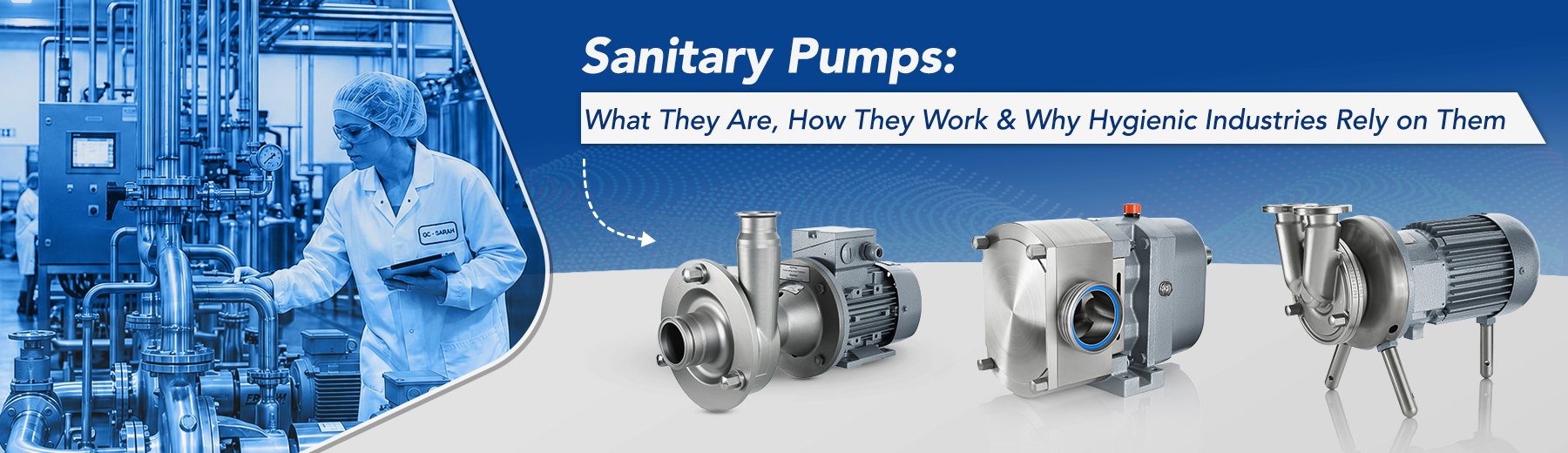
Every batch of milk, food, beverage & brewings, medicine, or shampoo that reaches you safely has passed through a pump somewhere along the line. That pump was not ordinary equipment, though, it was built to move product without breaking it down or leaving residue behind for bacteria to grow in.
That is the whole idea behind sanitary pumps, and once you understand what they do, hygienic processing starts making a lot more sense.
What Are Sanitary Pumps?
A sanitary pump is designed specifically for industries where cleanliness is not optional, it is the law. Unlike a standard industrial pump that just moves fluid from point A to B, this equipment is built with smooth surfaces, minimal dead spaces, and corrosion-resistant 316L stainless steel.
These machines fall under the broader types of sanitary pumps used across dairies, breweries, food and pharmaceutical plants. Fristam builds several of these, each solving a different problem for sanitary pumps for food and beverage industry operations, from thin syrups to thick pastes.
How Do Sanitary Pumps Work?
Most hygienic equipment falls into two categories:- Centrifugal and
- Positive displacement.
Centrifugal pumps use a spinning impeller to fling fluid outward, which suits thinner products at high volumes. Positive displacement units trap a fixed volume and push it through mechanically, which suits thicker or shear-sensitive fluids better.
This matters a great deal when selecting hygienic pumps for industries like biopharma, where minor product damage can ruin a batch. A self-priming sanitary pump adds another layer here, since it clears air from suction lines on its own.
Types of Sanitary Pumps and Their Applications
Fristam's product range covers most hygienic pumping needs a buyer runs into. Here is a quick breakdown:
- FP Centrifugal Pump: high flow rates up to 550 m³/h, suited to dairy, beverage, and chemical transfer without roughing up the product.
- FL/FL3 Rotary Lobe Pump: a genuine rotary lobe pump for hygienic application, built for viscosities up to 1,000,000 mPa.s with reversible flow.
- FDS Twin Screw Pump: a reliable twin screw pump for sanitary processing that handles thick and thin products in one unit, including self-priming.
- FSP Shear Pump: built for blending and emulsification, generating shear rates up to 125,000 1/s for lump-free output.
- FZ Liquid Ring Pump: a dependable self-priming pump for sanitary fluid transfer, made for high-gas liquids and full tank evacuation during CIP return.
A sanitary pump types and applications guide like this one helps buyers narrow their options down before they even get on a call with a vendor.
How to Choose a Sanitary Pump for My Industry
Choose the pump based on your product first, not the catalogue. Check the viscosity range carefully. See if the fluid carries particles or air, and whether it gets damaged from rough pumping too easily.
A dairy plant handling raw milk needs different equipment than one processing thick cheese curd. If your process runs frequent CIP cycles, a twin screw pump for sanitary processing or a self-priming unit often works better than a basic centrifugal setup. Flow rate and floor space factor in too, and sanitary pumps rarely come as one size fits all.
Why Is Hygiene Important in Pump Design?
Hygiene in pump design is not a marketing checkbox, its the actual difference between a safe product and a recalled one. Poorly designed pumps trap residue in gaskets and dead legs, creating spots where bacteria multiply undisturbed. That is why standards like 3-A, FDA, ASME BPE (Bioprocessing Equipment) and EHEDG exist, and why Fristam builds every unit around CIP and SIP compatibility.
This matters even more for sanitary pumps for food and beverage industry operations, where one contamination event can shut a line down for days. Smooth welds and a genuine rotary lobe pump for hygienic application design reduce that risk considerably.
Why Fristam is the Best Choice?
Fristam has built hygienic processing equipment for over a century, and that shows across its range of types of sanitary pumps.
- The FP Centrifugal Pump delivers gentle high-flow transfer, a dependable pick among hygienic pumps for industries like dairy and beverages.
- The FL/FL3 Positive Displacement Pump manages extreme viscosities without pulsation.
- The FDS Twin Screw Pump covers both viscosity extremes in one unit.
- The FSP Shear Pump produces consistent emulsions with less raw material waste.
- The FZ Liquid Ring Pump works as a genuine self-priming sanitary pump built for CIP return without airlocking. Every model gets documented for full traceability, which matters in regulated industries.
Conclusion
Sanitary pumps are not just industrial equipment, they are a hygiene control point built into your process. Choosing the right type, whether centrifugal, rotary lobe, twin screw, shear, or a dedicated self-priming pump for sanitary fluid transfer, depends on viscosity, sensitivity, and cleaning needs.
A sanitary pump types and applications guide becomes useful when your plant handles different product lines together. Fristam offers all five pump categories with dependable designs. They work well across dairy, food, pharma, and personal care manufacturing.
Frequently Asked Questions
1. What is a sanitary pump and how is it different from a regular industrial pump?
A sanitary pump uses hygienic materials, smooth internal surfaces, and CIP compatibility, while a regular pump usually focuses only on moving fluid efficiently.
2. Which sanitary pump is best suited for shear-sensitive or highly viscous fluids?
Rotary lobe and twin screw pumps handle shear-sensitive, highly viscous products best, since they move fluid gently without creating excess turbulence.
3. How do I choose between a centrifugal pump, rotary lobe pump, and twin screw pump for hygienic applications?
It comes down to viscosity and shear sensitivity. Centrifugal suits thin fluids, rotary lobe suits thick ones, and twin screw covers both extremes well.
4. What types of sanitary pumps are used in food, dairy, and pharmaceutical industries?
Centrifugal, rotary lobe, twin screw, shear, and self-priming pumps all see regular use across these industries, depending on the product being handled.
5. Do sanitary pumps need special maintenance compared to regular pumps?
Yes, they need routine seal checks, CIP performance verification, and periodic gasket inspection to keep hygiene compliance intact over the long run.