
Leveraging Future IoT and AI for Pump Health Monitoring and Failure Prevention
March 12, 2026
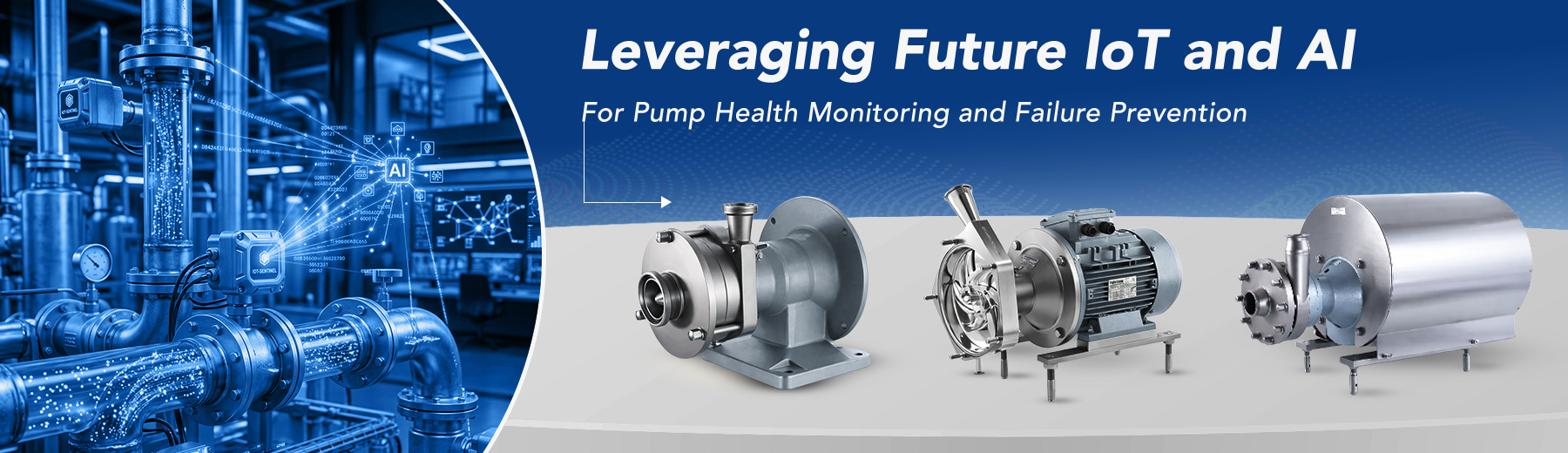
Pump failures in processing industries create more than just downtime issues. They affect sterile lines and trigger batch rejections. Compliance risks also increase. That gap between normal operation and sudden failure usually stays invisible.
Industrial Pump Monitoring Systems built on IoT (Internet of Things) and AI close that gap. Real-time sensor data combined with machine learning gives maintenance teams early, actionable warnings, weeks before a seal degrades or a bearing reaches the end of its life. For plants running Fristam equipment like the FDS Twin Screw or FP Centrifugal series, that's not just an operational upgrade. It's a direct line of defence for hygienic integrity and batch quality.
This blog breaks down how Future
monitoring systems work in sanitary processing environments, what failures they prevent, and how to implement IoT pump monitoring without introducing contamination risks into your existing setup.
How Future AI and IoT Improve Pump Health Monitoring
A pump failure in a standard plant is costly. In pharma or food processing, it's a batch loss incident. A degrading seal doesn't just leak, it opens a pathway into a sterile line, and that changes everything. Modern AI and IoT technologies let you detect these problems weeks ahead, not hours after the damage is done. Here is what that actually looks like in practice.
- Predictive Maintenance: AI continuously analyses vibration signatures and acoustic patterns to catch developing faults like bearing wear, shaft misalignment, or cavitation before any visible failure occurs. For Fristam FDS and FP series pumps, this means component-level intervention well before product integrity is at risk.
- Real-Time Monitoring: IoT sensors continuously track pressure, power use, and fluid flow. Data moves into live dashboards. Engineers get instant visibility across pump stations, even remote ones that rarely receive regular inspections.
- Optimised Performance: AI adjusts operating speeds through variable frequency drives to match real-time process demand. This can reduce energy consumption by up to 50% while lowering wear on seals, bearings, and impellers over the long run.
- Reduced Unplanned Downtime: Early fault detection allows teams to plan repairs during CIP windows. It avoids sudden stoppages. Batch losses are reduced significantly in hygienic processing environments.
- Digital Twin Technology: AI builds a virtual replica of your pump that simulates maintenance strategies before applying them in the real environment. Useful when evaluating how product viscosity changes affect longevity.
The four components powering all of this are vibration, temperature, and pressure sensors; cloud-connected data gateways; AI analytics software calculating remaining useful life; and automated dashboards flagging deviations instantly.
Benefits of AI Predictive Maintenance in Pump Systems
Plants running predictive maintenance for pumps don't just report fewer failures. They report a completely different relationship with their equipment. Reactive maintenance is expensive, stressful, and almost always avoidable. In food and pharmaceutical processing, one unplanned pump failure can compromise an entire batch and trigger compliance questions. AI-driven predictive maintenance addresses all of it at the source.
- Reduced Unplanned Downtime: AI tools catch early warning signs, including vibration anomalies, temperature spikes, and pressure deviations that routine inspections would miss entirely. Facilities running industrial pump monitoring systems have reported reductions in unscheduled stoppages of up to 75%.
- Significant Cost Savings: Shifting to condition-based maintenance means you only service components when the data says to. Many operations report 25 to 30% lower overall maintenance costs after making this shift.
- Enhanced Operational Efficiency: AI flags when a pump is running below peak efficiency due to wear. Targeted repairs restore performance and energy efficiency simultaneously, which adds up fast in high-throughput lines.
- Improved Safety and Compliance: Predicting failures before they become catastrophic reduces the risk of hazardous leaks or sterility breaches, directly supporting regulatory compliance in pharmaceutical and food-grade environments.
- Optimised Spare Parts Management: Accurate predictive analytics means parts are ordered just in time. Inventory costs come down, and the right components are available when the maintenance window arrives.
Building a Hygiene-First Monitoring Stack
Plant managers in pharma and food processing know this better than anyone. The question isn't whether to monitor. It's how to do it without creating dead legs or contamination ingress points.
1. Smart Pump Monitoring Solutions today solve this with non-invasive methods. Three approaches work particularly well on Fristam equipment.
2. Vibration Sensors (Clamp-On):These mount on the bearing housing or motor exterior, with no product contact at all. For the FP Centrifugal series, they reliably catch early-stage cavitation and impeller wear signatures before visible damage develops.
3. Smart VFDs: Your Variable Frequency Drive is already collecting data. Torque, current draw, speed deviations. By extracting this via Ethernet/IP or Modbus, an industrial pump monitoring system detects viscosity changes and dry-running conditions with zero additions to the wetted zone.
4. Flush Diaphragm Pressure Transmitters: 3-A sanitary flush-mount transmitters replace standard gauges at suction and discharge points. CIP-compatible, no dead legs, and real-time pressure data fed directly to your dashboard. A natural fit for the FDS Twin Screw handling high-viscosity or shear-sensitive products.
5. Contamination-Reducing Service Features: Fristam pump design supports cleaner and faster maintenance. Features like front loading seals and flexible couplings reduce disassembly. Fewer tools enter the product flow path. When monitoring flags issues, teams act quickly without adding contamination risk.
Conclusion
A Fristam pump is built to last. The FP Centrifugal handles everything from thin dairy flows to suspended solids with consistent, reliable output. The FDS Twin Screw manages extreme viscosities and high differential pressures without breaking a sweat. These are premium assets, and they deserve a protection strategy that matches their build quality.
Adding IoT pump monitoring and an AI monitoring system to that foundation isn't a complicated overhaul. Start with your two or three most critical pumps. Let the data build a baseline. Then let AI do what humans physically cannot, which is watch every parameter, every second, without missing a single deviation.
Predictive maintenance for pumps has moved past being a future-facing concept. It's operational reality in plants that take uptime, hygiene, and batch integrity seriously. The question isn't really whether your facility needs it. Its how much longer you can afford to run without it.
Frequently Asked Questions
1. Will IoT sensors affect hygiene validation on my Fristam pump?
Non-invasive sensors don't contact the product zone, so they typically don't impact validation status. Loop in your Fristam distributor before retrofitting anything if your facility operates under FDA or EHEDG requirements.
2. How long does AI take to accurately detect a fault?
Most platforms need two to four weeks of baseline data. After that, anomalies like early bearing wear are usually flagged days to weeks before they cause an actual failure.
3. Our plant runs aggressive daily CIP and SIP cycles. Can sensors handle that?
Yes, with the right spec. Clamp-on sensors on the motor housing or bearing bracket see no direct chemical exposure. For process-side hardware, look for IP69K-rated units and keep mounting points away from direct spray zones.
4. We're a mid-sized dairy plant. Is this realistic for our scale?
Absolutely. Entry-level industrial pump monitoring systems have dropped significantly in cost. Most plants start with two or three critical pumps and expand after seeing results. One prevented batch rejection often covers the full initial setup cost.
5. What's the real difference between condition monitoring and predictive maintenance for pumps?
Condition monitoring tells you what the pump is doing right now. Predictive maintenance for pumps uses AI trend modelling to tell you what it's likely to do in the coming weeks, and when to act. One is a health check. The other is a diagnosis with a maintenance schedule already attached.